AI is fueling demand for finance talent, not replacing it
Toptal reports a 31% quarterly increase in demand for finance talent, driven by economic stability, AI adoption, and
Press Release Disclaimer: This is a press release distributed through the XPR Media network. It has not been independently verified by our newsroom.



PeopleImages // Shutterstock
AI is fueling demand for finance talent, not replacing it
Much of the conversation around artificial intelligence and the labor market focuses on volatility such as increasing tech company layoffs and shrinking opportunities for junior-level workers. While those disruptions are continuing, Toptal’s new High-skilled Job Report for Q2 2026 tells a different story for one pocket of the job market.
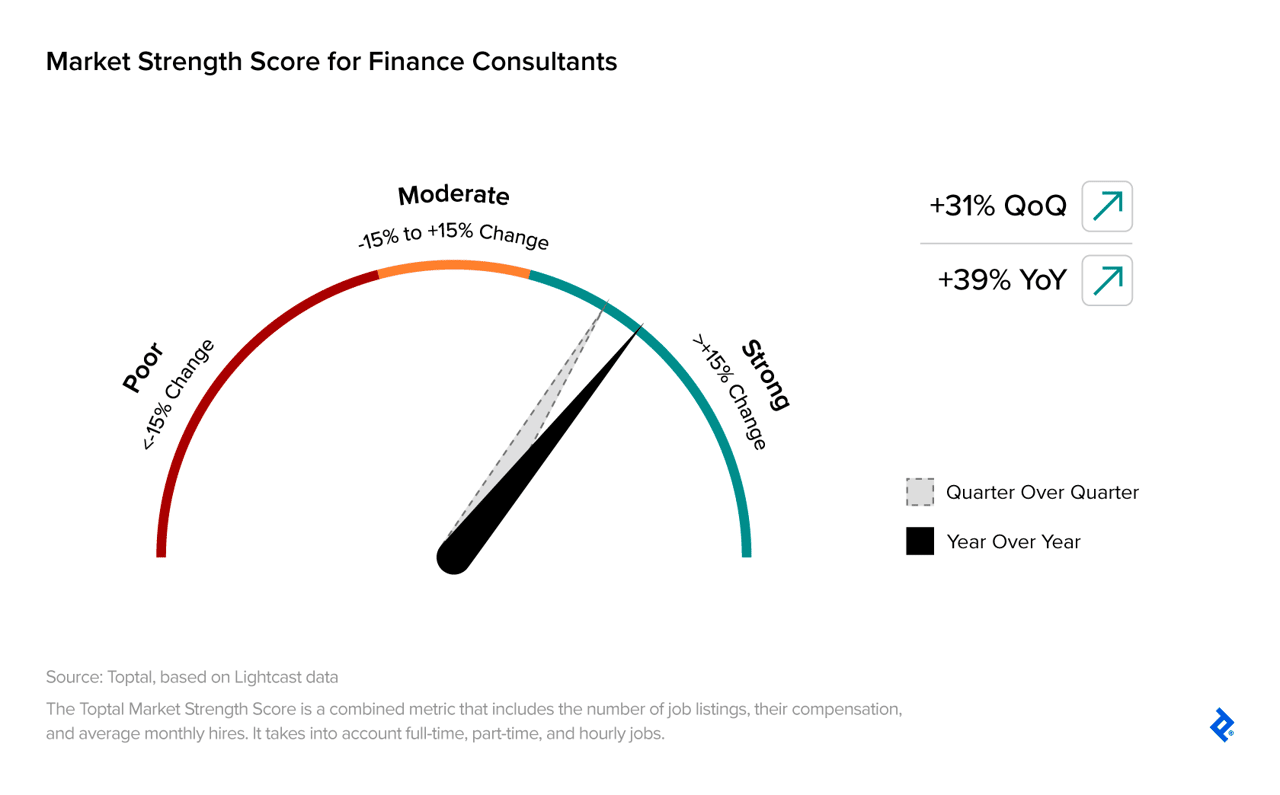
The report found that demand for experienced finance consultants grew 31% quarter over quarter (QoQ) and 39% year over year (YoY). It was the strongest showing for any of the 10 technology and professional services job segments the company tracks (the others are data science experts, designers, developers, information security specialists, management consultants, marketers, product and project managers, and sales professionals).
Toptal
One driver of the jump may be a general release of pent-up hiring demand as heightened volatility in the larger economy started to calm in Q2. Energy prices eased and U.S. job growth was steadier than it was in Q1, with moderate growth in April and May, and smaller gains in June. Indeed, the experienced technology and professional services sector as a whole experienced a moderate increase in demand, 7.1% QoQ and 12.6% YoY, according to the report. But this overall resilience doesn’t fully explain the magnitude of the increase seen in the finance segment.
Behind the Surge in Demand for Finance Talent
The finance sector had a strong quarter in Q2, with bank earnings, initial public offerings (IPOs), mergers, and acquisitions all climbing. That increased financial activity led to higher demand for finance professionals with skills in due diligence, valuation, and accounting, according to the report.
Another driver of the increasing demand for finance talent may be AI itself, a counterintuitive result given widespread fears among job seekers that AI will eliminate jobs rather than create them. As companies adopt AI across finance, accounting, and banking functions, they need experienced experts who can carefully evaluate AI deployment options, assess risks, and apply human judgment and expertise to AI output and decision-making. Companies also need finance consultants to help them model and validate the return on investment (ROI) from AI investments.
The surge in demand may also be evidence of a correction of sorts, says Erik Stettler, Toptal’s chief economist and author of the report. Finance was one of the areas of the labor market most exposed to AI-related hiring volatility early on, he says. Companies initially assumed AI could handle a significant swath of financial analysis independently. Now these organizations are developing a better understanding of the strengths and limitations of AI, prompting them to hire more human experts, according to Stettler.
This mirrors a trend being reported elsewhere. A recent survey by Robert Half found that 32% of hiring managers who eliminated roles after implementing AI later had to hire people back for the same, or similar, roles. Although the full report results aren’t publicly available, Fast Company reported in June that the finance sector had the highest share of managers who rehired for AI-impacted roles, at 44%. As Megan Slabinski, district president of technology talent solutions at Robert Half, told the publication, “Companies that moved too quickly on AI are now seeing where it falls short in practice. While they may have seen early efficiency gains, those efforts also surfaced gaps in quality, oversight, and decision-making, especially as business demands picked up.”
A Sharp Acceleration After Slower Growth
After an essentially flat QoQ trend in Q4 2025, demand for experienced finance consultants accelerated in Q1 2026, with an 11% increase, according to previous Toptal reports. Q2’s 31% jump shows that trend continuing to pick up speed.
Because Toptal’s talent network of 30,000 professionals is fully distributed, the report also examines demand specific to remote and hybrid jobs. Demand for experienced finance consultants within that segment increased 27% QoQ and 42% YoY. Full-time postings for remote or hybrid finance consultants were up 7% QoQ, while part-time postings grew far faster (55%), suggesting that employers are leaning into flexible finance talent that can fill urgent openings as business needs change.
That growth runs counter to fears that AI would permanently reduce opportunities for finance experts. Instead, the data suggests AI adoption is driving increased demand for experienced finance talent. The report predicts that healthy demand will continue into Q3, with ongoing regulatory scrutiny increasing the need for compliance and governance expertise in particular.
Methodology
To measure the strength of various segments of the technology and professional services job market, the High-skilled Job Report uses a proprietary metric called the Toptal Market Strength Score. The score draws on three inputs from data analytics firm Lightcast: the number of new job postings, median compensation offered in those postings, and actual hiring activity. Hiring is equally weighted against postings and compensation, to correct for ghost jobs that employers advertise without real intent to hire.
This story was produced by Toptal and reviewed and distributed by Stacker.