TomoIDV Unifies Country-Specific Identity Verification Through a Single API
Tomoarrow, a South Korean fintech and regtech leader, has unified fragmented, country-specific eKYC processes into a
Press Release Disclaimer: This is a press release distributed through the XPR Media network. It has not been independently verified by our newsroom.


Tomoarrow, a South Korean fintech and regtech leader, has unified fragmented, country-specific eKYC processes into a single global API through its TomoIDV solution. Through a unified interface, TomoIDV selects the appropriate verification workflow and provider based on the user’s country, compliance requirements, and risk levels, then standardizes results from multiple sources into a consistent, easy-to-process format.
This press release features multimedia. View the full release here: https://www.businesswire.com/news/home/20260825343794/en/
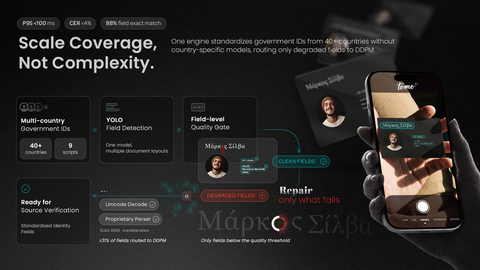
Tomoarrow has consolidated fragmented, country-specific eKYC processes into a single global API that adapts verification to each user’s country, compliance requirements, and risk level. (Image:Tomoarrow)
Businesses serving international customers have had to navigate different documents, writing systems, phone number formats, and data structures across markets. Integrating a separate verification provider for each market requires individual contracts, technical development, data conversion, and operational support—a repetitive, resource-intensive process with every new market entry.
TomoIDV goes beyond verifying the authenticity of an identity document. Where available, it cross-checks submitted names, dates of birth, addresses, phone numbers, and document information against authoritative data sources in the issuing country. This ensures submitted credentials match a trusted government or official database rather than relying solely on the document’s visual appearance.
The document recognition process combines field-level detection with selective generative restoration. It identifies key fields such as names, dates of birth, document numbers, nationalities, and other required information. Portions degraded by glare, blur, or screen recapture are restored before the characters are read.
The restoration model is applied only to fields that fail defined image quality thresholds. Fields with sufficient quality bypass heavy processing via a lightweight recognition pipeline. This selective approach is designed to improve recognition accuracy without applying a computationally intensive model to the entire document, preserving the low latency required for real-time verification.
Businesses can configure document verification, selfie matching, liveness detection, phone verification, and data cross-checking according to country, service type, and transaction risk. Once verification is complete, a client-specific Pseudonymous Permanent Identifier (PPID) is generated, enabling businesses to retrieve previous results and process reverification or deletion requests without unnecessarily exposing original identity data.
Each result includes the applied policy, verification items, processing path, and outcome in a structured format. While TomoIDV does not replace AML transaction monitoring, it provides reliable customer data and verification evidence for risk assessment, internal controls, and subsequent review.
TomoIDV also offers a comprehensive administrator dashboard, testing environment, and APIs for retrieving and deleting results. Through a single technical integration, enterprises can add new countries, verification methods, and onboard global users without rebuilding their identity infrastructure.
View source version on businesswire.com: https://www.businesswire.com/news/home/20260825343794/en/
Media gallery