Certified Carbon Monoxide Detector Manufacturer Buyer Guide: Evaluating EN 50291 Standards for European Apartments
SHENZHEN, CHINA, September 14, 2026 /EINPresswire.com/ -- Buyer Guide: Selecting Life-Safety Systems for Modern
Press Release Disclaimer: This is a press release distributed through the XPR Media network. It has not been independently verified by our newsroom.

SHENZHEN, CHINA, September 14, 2026 /EINPresswire.com/ — Buyer Guide: Selecting Life-Safety Systems for Modern European Multi-Family Housing
Buyer Guide: Commercial buyers, property developers, and safety equipment distributors across Europe face increasingly complex compliance mandates when sourcing residential safety hardware. In multi-family residential environments, selecting an experienced Certified Carbon Monoxide Detector Manufacturer is no longer simply a matter of basic procurement—it is a critical risk-management decision. Carbon monoxide (CO) is an odorless, colorless, and toxic gas produced by incomplete combustion in heating appliances, fuel-burning stoves, and localized boilers. A modern carbon monoxide detector functions as an essential life-safety device, continually monitoring ambient air, triggering high-decibel audible alarms, and issuing real-time digital notifications upon detecting dangerous gas concentrations. As regional housing directives tighten across the European Union, sourcing certified detection equipment built to rigorous testing frameworks has become the cornerstone of effective building management.
European Residential Architecture Dynamics and Urban Safety Trends
The European residential housing landscape presents distinct structural characteristics that elevate carbon monoxide risks. A substantial portion of multi-family housing across Western and Central Europe consists of historic masonry buildings and mid-century modern apartment blocks. These structures often rely on centralized water heating systems, individual gas boilers, or localized combustion appliances installed within compact, poorly ventilated floor plans. Furthermore, modern energy-efficiency retrofits—such as triple-glazed windows, heavy weather-stripping, and airtight structural seals—significantly reduce natural air exchange. While these upgrades conserve heat, they inadvertently trap toxic gas emissions inside living spaces if combustion equipment experiences mechanical failure or flue blockages.
Compounding these structural challenges are urban living habits and evolving municipal regulations across major European capitals. In many historic residential zones, open-flame cooking, portable fuel heaters, or unvented combustion devices are strictly regulated or prohibited due to fire hazards and architectural limitations. Tenants frequently depend entirely on enclosed gas boilers for indoor heating and domestic hot water. When combined with seasonal heating spikes and aging exhaust infrastructure, micro-leakages can accumulate rapidly. For property managers, housing associations, and regional distributors, navigating these environmental dynamics requires implementing localized safety hardware that ensures early detection, minimizes false alarms, and maintains long-term reliability without burdening building maintenance teams.
Evaluating EN 50291 Standards: The Technical Benchmark for European Compliance
To establish unified life-safety performance across member states, the European Committee for Standardization established the EN 50291 standard. This comprehensive benchmark sets strict engineering and testing requirements for electrical apparatus used to detect carbon monoxide in domestic premises. Unlike general electronics certifications, compliance with EN 50291 guarantees that a detector operates with precise electrochemical sensitivity, triggering alarms within specified time windows based on gas concentration levels (measured in parts per million, or ppm). For instance, at 50 ppm, the device must signal an alarm within 60 to 90 minutes, whereas at 300 ppm, it must trigger in under three minutes to prevent severe medical impairment or fatality.
The standard is divided into distinct operational frameworks: EN 50291-1 governs standard domestic properties, while EN 50291-2 covers recreational vehicles, boats, and mobile structures. Achieving compliance requires third-party testing by accredited European testing bodies, such as TUV Rheinland. Accredited detectors undergo grueling environmental stress evaluations, including temperature cycling, humidity resistance, long-term sensor stability, and cross-sensitivity testing against household chemicals. For commercial buyers, stocking or installing EN 50291 certified products serves as an authoritative endorsement of product integrity, ensuring full alignment with local housing codes, tenant protection laws, and insurance underwriting requirements across the European continent.
A Strategic 5-Step Evaluation Blueprint for B2B Procurement
To assist commercial procurement officers, property managers, and safety distributors in evaluating life-safety equipment, the following five-step sourcing framework outlines the key technical criteria for selecting residential carbon monoxide alarms.
STEP 1: Verify Third-Party Certifications and Accredited Testing Standards
The initial phase of procurement requires verifying that detection devices hold authentic, third-party certification marks rather than unverified self-declarations. Buyers should examine test reports issued by recognized laboratories like TUV to confirm full compliance with EN 50291-1 and EN 14604 standards, alongside mandatory CE, ROHS, and FCC marks. Partnering with an established manufacturer such as Shenzhen ARIZA Electronic Co., Ltd. ensures that every device batch conforms to strict quality assurance protocols. Operating as a world-leading smart alarm ODM specialist with 17 years of security manufacturing experience, ARIZA maintains robust quality systems verified through ISO 9001 and TUV audit frameworks, serving over 3,000 brand customers across 30 countries and holding more than 60 technical patents.
STEP 2: Assess Sensor Calibration Accuracy and Electrochemical Lifespan
The core component of any carbon monoxide alarm is its internal sensing element. B2B buyers must prioritize high-grade electrochemical sensors engineered for long-term stability and minimal drift. Unlike lower-grade semiconductor sensors, advanced electrochemical sensors offer high selectivity to carbon monoxide, eliminating false alarms triggered by common household vapors such as cooking smoke, alcohol, or cleaning agents. Procurement specifications should mandate a continuous operational lifespan—typically powered by sealed 3-year or 10-year lithium battery configurations—ensuring round-the-clock protection without requiring frequent battery replacement cycles by building maintenance staff.
STEP 3: Review Smart Connectivity and IoT Integration Capabilities
Modern apartment management increasingly demands integrated smart home capabilities to streamline property oversight. When evaluating hardware options, procurement teams should select devices that offer hybrid connectivity options, such as standalone local alarms, RF interconnected networks, or Wi-Fi/Tuya smart protocols. Smart carbon monoxide alarms enable real-time push notifications to smartphone applications, allowing tenants and property managers to receive immediate emergency alerts, battery warnings, and diagnostic status updates remotely. Interconnected models ensure that when one alarm detects gas in a utility basement or boiler closet, all linked alarms throughout the residential unit sound simultaneously.
STEP 4: Examine Enclosure Durability, Mounting Options, and Display Ergonomics
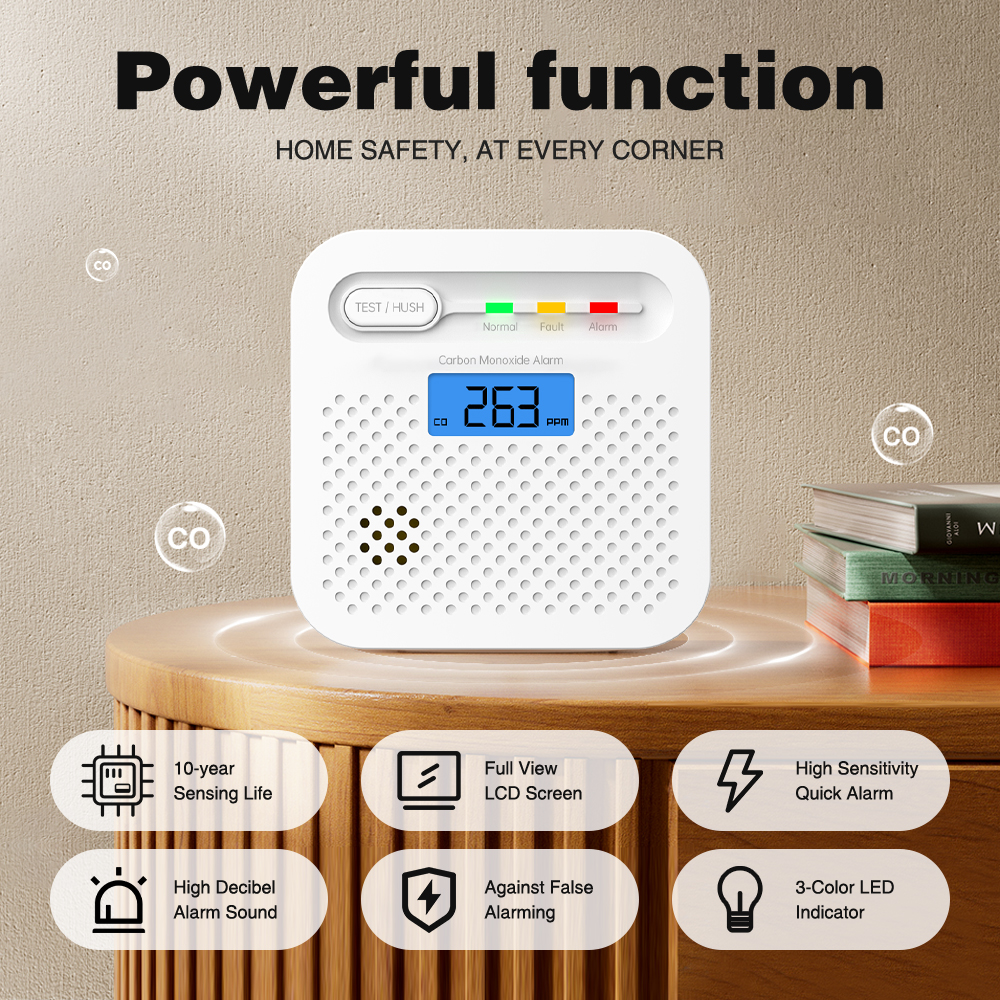
Physical engineering and human-centric design are critical factors in residential deployment. Safety detectors should feature flame-retardant ABS enclosure materials, compact form factors, and clear visual interfaces. An integrated digital LCD screen provides real-time readouts of peak CO concentrations, ambient temperature, and operational status, giving occupants immediate visual clarity before dangerous levels trigger full audible alarms. Furthermore, versatile mounting mechanisms—including wall bracket hardware and anti-tamper security plates—prevent accidental displacement or unauthorized removal in rented residential units.
STEP 5: Evaluate OEM/ODM Customization Capabilities and Field Application Performance
The final procurement step involves assessing the manufacturing partner’s capacity to customize hardware and software to fit specific regional market demands. Commercial buyers require flexible branding solutions, including custom packaging, localized user manuals, tailored firmware alarm thresholds, and private-label casing designs. Field performance records across European apartment projects demonstrate that deploying pre-calibrated, smart-enabled carbon monoxide alarms drastically reduces emergency service callouts caused by false triggers while accelerating building compliance approval during annual safety inspections.
To explore certified residential safety solutions, custom ODM manufacturing services, and complete technical specifications, visit the official corporate portal at https://www.airuize.com
Shenzhen ARIZA Electronic Co., Ltd.
Shenzhen ARIZA Electronic Co., Ltd.
email us here
Legal Disclaimer:
EIN Presswire provides this news content “as is” without warranty of any kind. We do not accept any responsibility or liability
for the accuracy, content, images, videos, licenses, completeness, legality, or reliability of the information contained in this
article. If you have any complaints or copyright issues related to this article, kindly contact the author above.

Media gallery