
New Toolkit Helps Schools Build Cell Phone Policies With Students, Not Just For Them
Challenge Success, a nonprofit affiliated with the Stanford School of Education, releases free cell phone policy
Press Release Disclaimer: This is a press release distributed through the XPR Media network. It has not been independently verified by our newsroom.
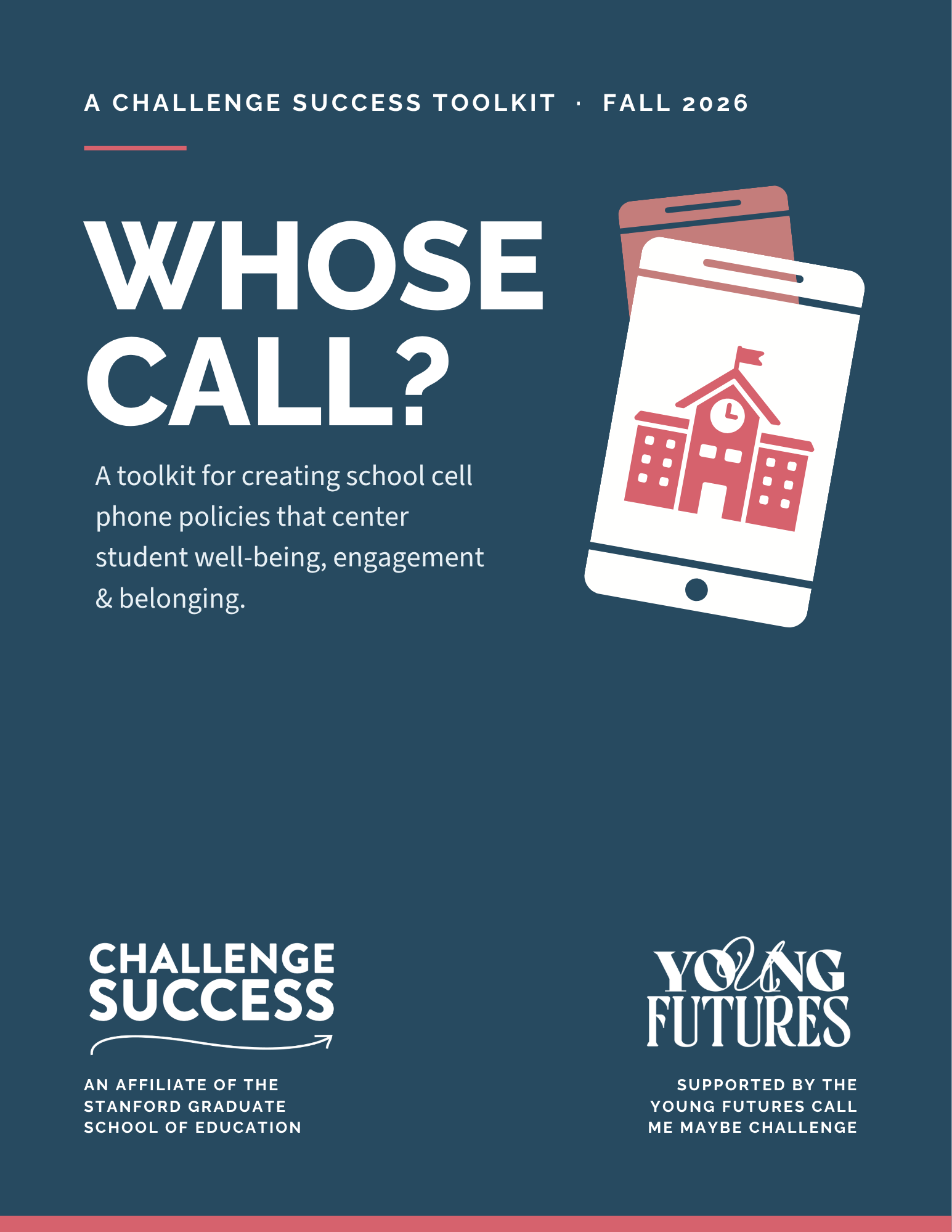

Challenge Success, a nonprofit affiliated with the Stanford School of Education, releases free cell phone policy resources funded by Young Futures.
STANFORD, CA, UNITED STATES, September 18, 2026 /EINPresswire.com/ — Challenge Success, a nonprofit affiliated with the Stanford Graduate School of Education, today released a free toolkit to help schools design cell phone policies that support student well-being, engagement, and belonging. The project was funded by a grant from the Young Futures Call Me Maybe Challenge, which provided funding to support innovative solutions that help young people, families and educators navigate the role of phones in schools by putting students at the center.
The toolkit documents how three schools designed and piloted phone policies alongside their students. Legacy Magnet Academy, La Cañada High School, and Sandia Prep each approached the same challenge differently, and the toolkit collects what they tried, what worked, and what they would change. Young Futures featured some of the work in their storytelling series here.
The toolkit includes:
-Real stories and sample policies from three schools that designed and piloted phone policies with, rather than for, students
-A research brief summarizing existing data on the effects of cell phone use and phone bans in schools
-A detailed walkthrough of the Challenge Success School Change Process
-Practical pilot ideas, protocols, and equity-centered tools schools can adapt to their own context
“We are proud to share the work these three schools undertook last year to rethink their cell phone policies. Each school followed its own path, shaped by its own community and needs, because we believe context matters: a policy that works for one school won’t necessarily work for another,” said Kimberly Tsai, Director of Programs at Challenge Success. “What these schools have in common is that they treated students as true partners in the process, not just people the policy would affect. That’s the throughline we hope other schools take from this toolkit: when you center student voice and keep well-being, belonging, and engagement as your goal, you end up with policies that actually work for the students and classrooms they’re meant to serve.”
Challenge Success will host a free webinar on October 28, 2026, featuring members of the teams at the partner schools. Registrants who cannot attend live will receive the recording.
The toolkit is available at no cost at challengesuccess.org/resources/school-cell-phone-policies.
About Challenge Success
Challenge Success is a non-profit affiliated with the Stanford Graduate School of Education. We partner with K-12 school communities to elevate student voice and implement research-based, equity-centered strategies that improve well-being, engagement, and belonging. Our vision is that educational systems value each student for their unique identities, assets, and individual definitions of success and effectively prepare them for the variety of opportunities and challenges they will encounter in school and beyond.
Caitlin Ciannella
Challenge Success
+1 541-280-9711
email us here
Visit us on social media:
LinkedIn
Instagram
Facebook
Young Futures Call Me Maybe Storytellers Series
Legal Disclaimer:
EIN Presswire provides this news content “as is” without warranty of any kind. We do not accept any responsibility or liability
for the accuracy, content, images, videos, licenses, completeness, legality, or reliability of the information contained in this
article. If you have any complaints or copyright issues related to this article, kindly contact the author above.

Media gallery
