From a single cell to 1.2 million: Scientists successfully create the largest cellular ‘family tree’ for a mammal
The findings bring us closer to understanding one of biology’s fundamental questions: how a single cell gives rise to
Press Release Disclaimer: This is a press release distributed through the XPR Media network. It has not been independently verified by our newsroom.

The findings bring us closer to understanding one of biology’s fundamental questions: how a single cell gives rise to the extraordinary complexity of life
SEATTLE, WA, UNITED STATES, October 8, 2026 /EINPresswire.com/ — How does a single fertilized egg produce all the cells in an animal’s body? This question has hung over science for decades, and it’s critical to understanding how diseases like cancer take hold and spread in the body. A new study in the journal Science led by researchers from the Seattle Hub for Synthetic Biology (Seattle Hub)—comprised of the Allen Institute, UW Medicine, and Biohub—moves us closer to the answer.
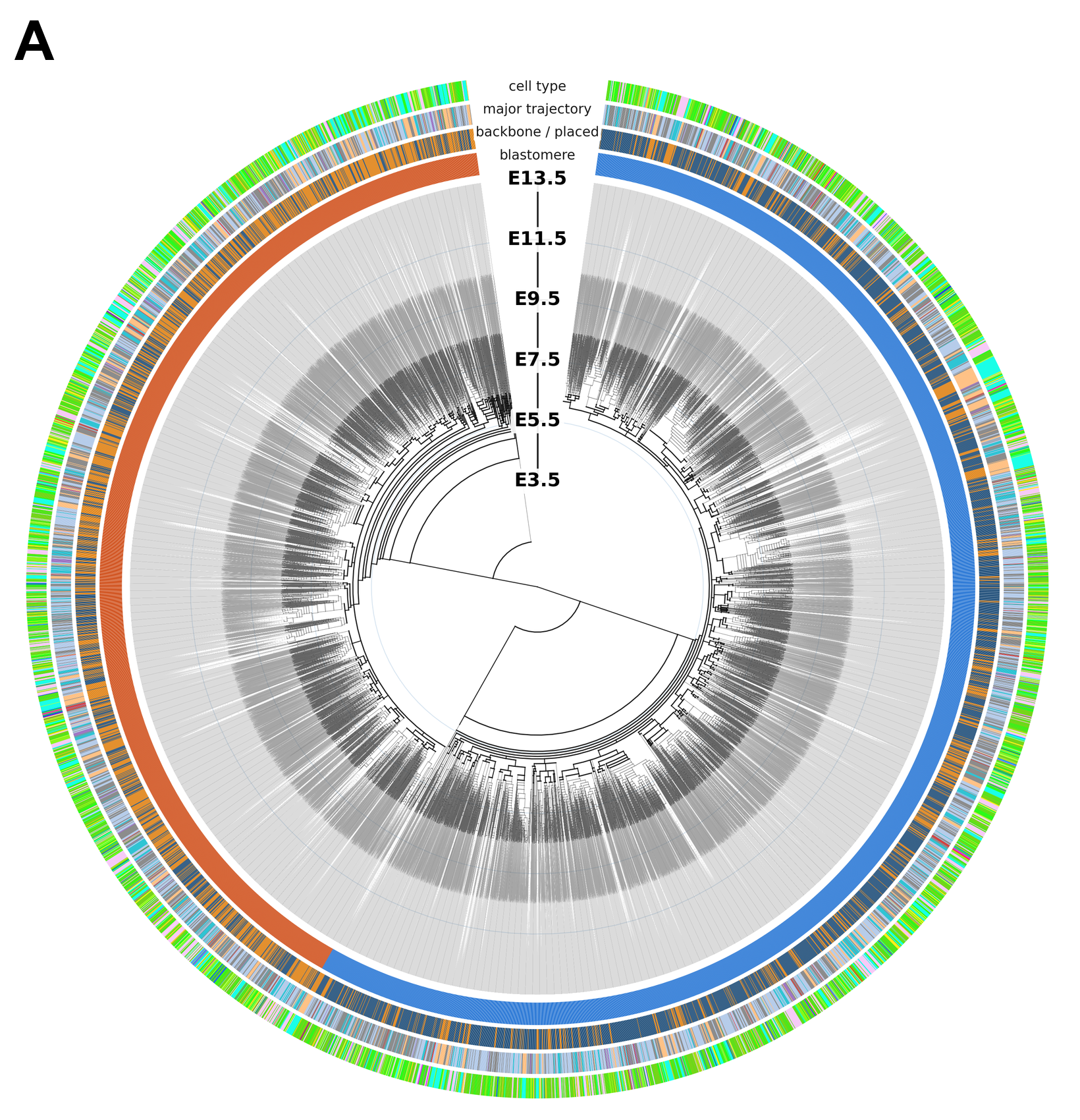
Researchers successfully built a time-calibrated lineage tree showing how a single cell turned into 1.28 million—about 10% of the cells in a two-week-old mouse embryo. This is by far the largest lineage tree ever built for a mammal.
“This work brings us closer to understanding one of biology’s fundamental questions on how a single cell gives rise to the extraordinary complexity of a living organism,” said Garabet Yeretssian, director of extramural research and partnerships at Biohub, which has provided ongoing funding for the Seattle Hub. “We are proud to support the Seattle Hub team in developing technologies that make it possible to trace that process at an unprecedented scale and open new ways to understand how those trajectories change during development and disease.”
Scientists used a technology called DNA Typewriter to reconstruct most of the cell lineage of a developing mouse, mapping how more than 1.28 million individual cells emerged from the first cell division to form tissues and organs. Their research could provide crucial insights into understanding birth defects and even cancer.
DNA Typewriter works by inserting sequential genetic stamps into a cell’s DNA as it divides. The stamps are copied into every daughter cell—a cell that results when a parent cell divides—and written in order, so they act like a journal within the genome, revealing how a cell divided and what happened to it when it did. Researchers injected the DNA Typewriter system into a fertilized mouse egg and let the embryo develop for 13.5 days, around two-thirds of the way through mouse gestation. They measured the genetic stamps in 1.58 million individual cell nuclei and reconstructed the “family tree” of cells composing the embryo.
“We were surprised by just how robustly marking happened right at the very first division,” said Haedong Kim, co-first author of the study. “It gave us two naturally occurring, independent copies of the same experiment, within a single embryo, so we could check every finding twice.”
Researchers identified multiple unique marks—genetic fingerprints that help scientists distinguish one cell from another—written by DNA Typewriter at the first cell division, when the fertilized egg split into two cells. And as they in turn continued to divide into more cells on two parallel but different tracks, researchers found that they contributed a different number of total cells to the embryo—about 57% to 42%—but provided the same proportion of every cell type.
“Our success in putting DNA Typewriter into a developing embryo, together with the resulting cell lineage, brings us closer to our dream of comprehensively mapping mammalian development,” said Jay Shendure, scientific director of the Seattle Hub for Synthetic Biology and professor of genome sciences at UW Medicine. “All cell types have their origins in development, and such maps may enable insights into the thousands of genetic disorders that arise during development.”
[What this means for human health]
This research is a critical first step because learning how cells divide and organize during development could help researchers better understand birth defects, cancer, and developmental disorders. By understanding the path of normal cellular development and how one cell becomes many, researchers have a reference model for comparison that can better identify when and where the normal path diverges into diseases. This knowledge can help researchers develop ways to prevent abnormal cellular development or intervene when cells go astray.
The DNA Typewriter technology could also be applied to determine how cancer cells spread, better understand how stem cell therapies work, and how aging affects cells in various organs. Recovering biological answers from lineage data could accelerate research that might otherwise take much longer.
Importantly, this study shows that it’s possible to record and read a dense cell lineage history of a complex mammal in a single experiment. The DNA Typewriter system embedded ordered molecular marks throughout mouse development that could be decoded to reconstruct which cell gave rise to which. The resulting tree is publicly available, along with an interactive browser called NextCell that allows anyone to explore this cellular family tree of mouse development.
Peter Kim
Allen Institute
+1 206-605-9884
peter.kim@alleninstitute.org
Legal Disclaimer:
EIN Presswire provides this news content “as is” without warranty of any kind. We do not accept any responsibility or liability
for the accuracy, content, images, videos, licenses, completeness, legality, or reliability of the information contained in this
article. If you have any complaints or copyright issues related to this article, kindly contact the author above.

Media gallery